
The practical answer
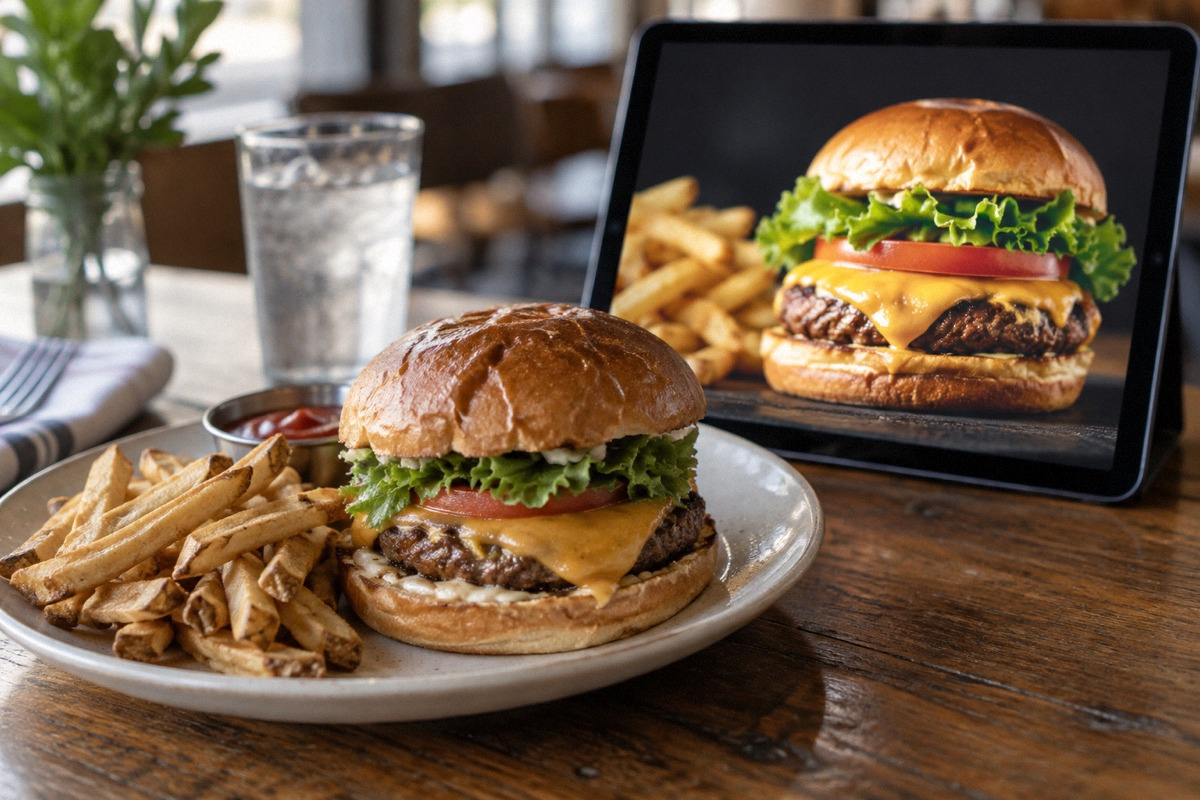
An AI-generated food image shows a dish your kitchen never made, so it can promise portions, ingredients and plating the guest will not receive. The FTC evaluates advertising by its overall net impression, including images, and fine print cannot cure a misleading picture. Use real photographs of your actual plates wherever a photo represents a menu item; they can be taken cheaply with a phone and window light. Reserve generated art for clearly decorative uses, and never let an image show more food, different ingredients or a different presentation than you serve.
Why guests react badly to generated food images
In an r/Denton thread about AI-generated images used by home food sellers, one commenter said they were very disappointed that a restaurant they liked, outside Denton, had replaced all the food photos on its menu with what they called hideous AI food (Reddit discussion). That is one person's reaction, recorded as a search excerpt, and the restaurant is not named. It still captures two separate problems that are worth distinguishing.
The first is accuracy. A generated image is not a photograph of your dish; it is a picture of what a model predicts a dish with that name might look like. It may show more shrimp than you serve, a garnish you do not use, a sauce in a different color or a portion on a plate twice the size of yours. The guest forms an expectation from the picture and then compares it with the plate. The second is trust. Even when an image is roughly accurate, some guests read generated art as a signal that the restaurant cut corners or is hiding what the food looks like, and the commenter's disappointment suggests that reaction can affect how a guest feels about a place they already liked. Accuracy problems create complaints and refunds; trust problems are harder to measure but can quietly cost regulars.
The net impression of an image
The FTC's Enforcement Policy Statement on Food Advertising says the Commission focuses on an ad's overall net impression, including the juxtaposition of phrases and images, and that claims can be implied as well as express (FTC, Enforcement Policy Statement on Food Advertising). That 1994 statement was written mainly about nutrient content and health claims, so it does not address AI images or menu photos specifically. More directly, the FTC's 2024 business guidance post about a hypothetical seafood restaurant says pictures and symbols can make claims without words, that false implied claims are illegal, and that menus and social media count as advertising (FTC, Mind your net impression).
Applied to food images, the question is what a reasonable guest would understand from the picture next to a menu item. Most guests understand that a photo is styled and lit, and that their plate will not be identical. They do not expect the photo to show ingredients the dish lacks, a portion substantially larger than they will receive, or a presentation the kitchen never uses. That is true whether the image was generated, taken from a stock library or photographed years ago before a recipe changed. AI simply makes it much easier to create an image with no connection to the actual plate.
The FTC's small-business guidance adds that advertisers need a reasonable basis for claims and that fine print cannot contradict other statements or clear up a misimpression; it also notes every state has its own consumer protection laws (FTC, Advertising FAQ's: A Guide for Small Business). This article does not conclude that any particular image is unlawful; it explains the standard so you can judge your own.
An accuracy check for every menu image
Whatever the source of an image, compare it with the dish as your kitchen currently plates it. Put a freshly plated dish next to the image on a screen and go through the attributes a guest will notice. Any difference that changes what the guest gets, rather than how it is styled, is a reason to replace the image.
Run this check for every channel where the image appears: printed menu, menu board, website, online ordering, delivery-app listings and social posts. Images tend to spread from one channel to the others and then stay long after the dish changes.
| Attribute | Acceptable variation | Replace the image if |
|---|---|---|
| Portion size | Close crop or styling that does not change apparent quantity | Image shows noticeably more food or a larger serving than the plate |
| Components | Minor garnish differences that the menu text covers | Image shows ingredients, sides or toppings the dish does not include |
| Countable items | Same count visible | Image shows more pieces, such as shrimp, wings or dumplings, than you serve |
| Preparation and color | Lighting differences | Different cooking method, sauce color or doneness than served |
| Plating and vessel | Different background or table setting | Different plate size or presentation the kitchen never uses |
| Text on image | None | Garbled or invented text, logos or labels typical of generated images |
Real photography on a small budget
The most reliable fix is a real photograph of the real plate, and it does not require a professional shoot. A current phone camera, a window with indirect daylight, a plain background and a cook who plates the dish exactly as it is served will produce usable menu photos. Shoot during a slow period so the kitchen can plate carefully, photograph each dish from the angle that shows its main components, and take several frames to choose from.
Keep the styling honest. Light editing for exposure, white balance and cropping is normal; adding components, enlarging portions or replacing the plate is not. A simple rule for staff: the photographed plate should be one the kitchen could send to a guest without changes. If you hire a photographer, give them the same rule in writing and ask them not to use generative fill or composite elements on menu photos.
- Plate each dish to spec, using standard portions and the actual serving vessel.
- Shoot near a window in indirect light, on a plain surface, during a slow period.
- Limit edits to exposure, color balance, cropping and minor cleanup of crumbs or smudges.
- Record the date each photo was taken and the recipe version it shows.
- Retake photos when a recipe, portion or plating changes.
When labeling a generated image is enough, and when it isn't
Some operators add a note such as illustration or AI-generated image to generated pictures. Disclosure has value, because it tells guests the picture is not a photograph. But it does not fix an image that misrepresents the dish. FTC guidance says fine print cannot contradict other statements or clear up a misimpression, and a small label under a picture showing six shrimp does not change the fact that the guest was shown six shrimp.
Generated art fits best where it does not represent a specific menu item: a decorative border, a seasonal illustration on a website banner, an abstract background, or a clearly stylized illustration that no reasonable guest would read as a photograph of a dish. When an image sits next to an item name and price, treat it as a representation of that item and hold it to the accuracy check, whatever its source. If you do use a generated image in a borderline context, label it clearly and visibly, not in a footer.
Delivery-app and platform listings
Delivery and ordering platforms often display a photo beside every item, and guests may see that photo more often than your printed menu. Those listings are part of the net impression of your advertising, and they are also the place where a mismatch most quickly becomes a complaint or refund request, because the guest is comparing the photo with food in a container on their counter.
Platforms set their own rules for item photos, and those rules can change; check each platform's current merchant terms and photo guidelines before uploading generated images, and do not assume one platform's policy applies to another. Account for packaging too: a photo of a carefully plated dish on ceramic may not represent what arrives in a takeout container. For delivery listings, consider photographing the dish as packed, or at least ensure the portion and components shown match what goes in the container. The related article on delivery-app refund claims covers how mismatched expectations turn into adjustments.
Worked example: replacing generated images on a 30-item menu
Hypothetical example, for illustration only. A restaurant's online ordering page and two delivery listings show photos for 30 items. Twelve are AI-generated images added during a rebrand; the other 18 are real photos, some of them old.
The manager runs the accuracy check on all 30. Of the 12 generated images, 9 fail: four show more countable items than are served, three show garnishes or sides the dish lacks, and two show a different sauce color. Of the 18 real photos, 4 fail because recipes changed after they were taken. That is 13 images to replace, 9 plus 4.
The owner compares two options. A staff phone shoot over two slow afternoons costs only kitchen time and the food plated. A local photographer quotes a hypothetical $400 for 25 dishes, or $400 divided by 25, which is $16 per dish. The owner chooses the photographer for the 13 failed images plus 12 more: the 3 generated images that passed, replaced because the brand decision is to use only real photos for items, and 9 older real photos due for a refresh. That is 13 plus 3 plus 9, or 25 dishes, and the no-generative-edits rule goes into the agreement. One decorative illustration on the website banner stays, labeled as an illustration. Each new photo is logged with its date and recipe version.
Keeping images accurate over time, and what to keep on file
Image accuracy decays the same way menu wording does: the recipe changes, a supplier substitutes a product, portions are adjusted to manage costs, and the photo stays. Tie photo review to menu changes. Whenever a dish's recipe, portion or plating changes, flag its photos in every channel for review, and reshoot rather than editing an old photo to approximate the new dish.
Keep a simple photo register: item, channel, image file, source (staff, photographer, generated), date taken, recipe version shown and date of last accuracy check. Keep the original files and any photographer agreement. If a guest complains that a dish did not look like its photo, the register lets you check quickly whether the image is current and accurate, and fix it if it is not.
Questions that come up next
Is it illegal to use AI-generated food photos on a restaurant menu?
Not inherently, but any image shown with a menu item contributes to the ad's net impression, which the FTC uses to judge whether advertising is misleading, and states have their own consumer protection laws. An image showing more food, different ingredients or a different presentation than you serve can mislead whatever its source. Real photos of actual plates avoid the problem.
Does labeling an image 'AI-generated' make it acceptable?
A clear label helps guests know the picture is not a photograph, but it does not fix an inaccurate image. FTC guidance says fine print cannot contradict other statements or clear up a misimpression. If the image shows more shrimp or different sides than the dish includes, replace it with an accurate photo rather than relying on a label.
Sources & context
Forum accounts are unverified experiences. Read government sources for their stated jurisdiction and check requirements with the responsible authority for your location.
- What's with the AI slop, selling food out of the garage hustles? (r/Denton)reddit · Search excerpt only. A commenter says they were disappointed that a restaurant they like, outside Denton and unnamed, replaced its menu food photos with AI images. One guest's reaction; it does not measure how common such reactions are. The thread's main topic is home food sellers.
- Enforcement Policy Statement on Food Advertising (FTC, 1994)government · Federal. States the FTC focuses on an ad's overall net impression, including juxtaposition of phrases and images, and recognizes express and implied claims. Written mainly for nutrient content and health claims; applied here to food images by analogy, not as a rule about AI imagery.
- Mind your net impression: when seafood is not wild, fresh-caught, or local (FTC Business Blog, September 2024)government · Federal business guidance. Says pictures and symbols can create implied claims, false implied claims are illegal, and menus and social media are advertising. About sourcing claims, not AI images; used for the principle that images make claims.
- Advertising FAQ's: A Guide for Small Business (FTC)government · Federal guidance: reasonable basis for claims, fine print cannot cure a misimpression, and state consumer protection laws also apply. General, not image-specific.


