
Menu economics
How should I price a menu item: food-cost percentage or market price?
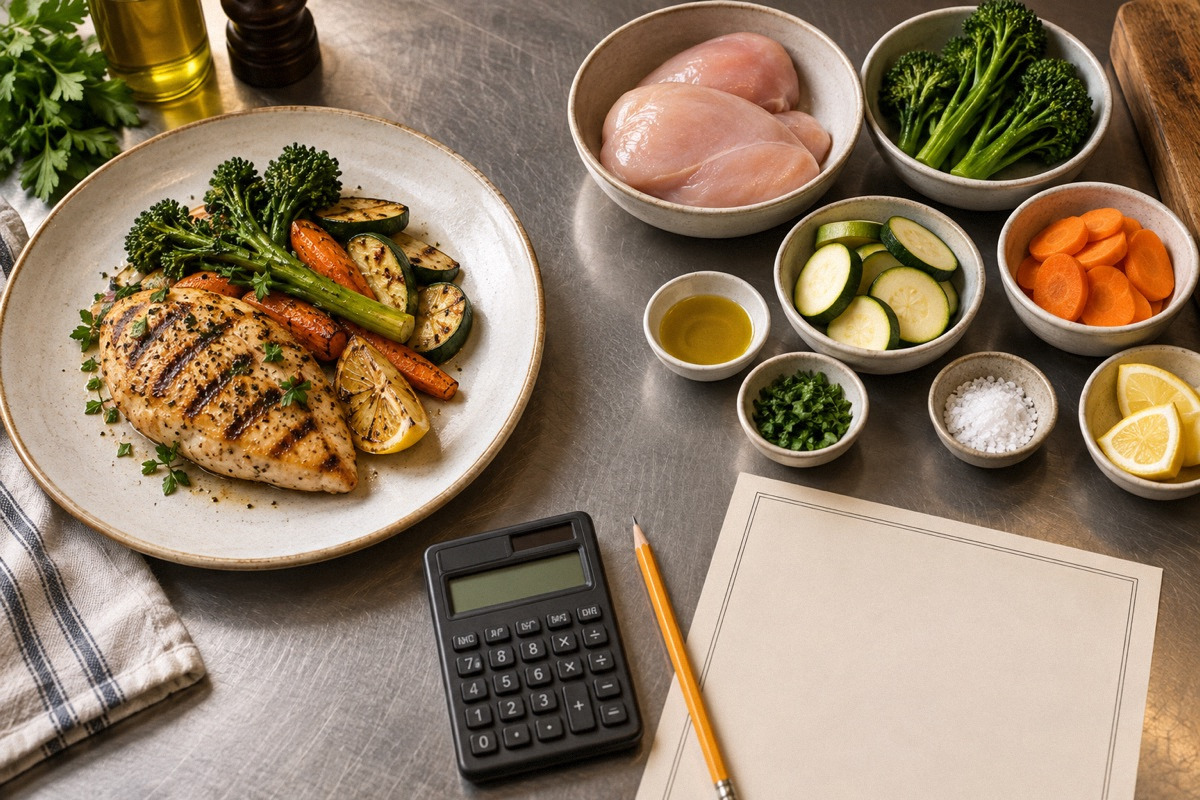
Price a menu item using a target food-cost reference price, contribution after all variable costs, and market benchmarks you test. Worked examples and checklist.

The restaurant journal
Practical answers to the problems behind the menu: buying, costing, kitchen work, guest trust and opening your next location.
Start here · Menu economics
Price a menu item using a target food-cost reference price, contribution after all variable costs, and market benchmarks you test. Worked examples and checklist.
Read the guide100 guides
Menu economics
Price a menu item using a target food-cost reference price, contribution after all variable costs, and market benchmarks you test. Worked examples and checklist.
Menu economics
Build a recipe costing spreadsheet: master ingredient list, unit conversions, sub-recipes and recipe cards that reprice every plate when an invoice changes.
Menu economics
Purchases divided by sales is not food cost. Use beginning inventory plus purchases minus ending inventory, with clean cutoffs, transfers and a worked example.
Menu economics
Add prep and line labor to menu engineering. A worked side-dish example shows how stars, plow horses, puzzles and dogs shift once labor minutes are counted.
Menu economics
Q-factor costing for table condiments, to-go sauce packets and free extras: measure a week, set an allowance, decide what to charge and review it as prices swing.
Menu economics
How many menu items is right depends on orders per item, ingredient overlap and prep shelf life. Use a coverage test to find which dishes to cut or rotate.
Menu economics
Build an ingredient-by-dish matrix, find single-use perishables, redesign around shared preps and set order cadence so your menu wastes less. Worked example inside.
Menu economics
Raise menu prices without losing regulars: find under-earning items, stagger small item-level increases, protect anchor dishes and check volume break-even.
Menu economics
Shrinking portions vs raising prices: when size becomes a menu claim, what FTC and DC law say about misleading quantities, and how to re-spec dishes honestly.
Menu economics
Measure your own restaurant food waste with a simple log: categories, columns, a two-week worked example, and why borrowed industry waste statistics mislead.
Menu economics
Work out the delivery-app price that actually nets what an in-store sale does, after commission on the marked-up price, packaging, refunds and rating effects.
Menu economics
Surcharge, cash discount or dual pricing? How the three differ, what DC's fee disclosure advisory implies, and which card-network and state rules to verify first.
Menu economics
A playbook for one-ingredient cost shocks: measure exposure, then choose a price change, spec swap, portion change or pause, with an exit plan when prices fall.
Menu economics
How to decide if vegan dishes belong on a non-vegan menu: build them from existing stock, protect the line, capture mixed groups and promote without overdoing it.
Menu economics
Why guests resent token vegan dishes, and how to set composition standards, cost the plate and price by contribution so plant-based entrees feel worth it.
Ingredients & suppliers
Why the same distributor SKU changes price every invoice, how to separate market items from stable ones, track history, and ask for contract pricing.
Ingredients & suppliers
How cost-plus distributor contracts work, why the definition of cost matters as much as the markup, and what to check on audits, rebates and renewal.
Ingredients & suppliers
Compare broadline delivery with cash-and-carry on total landed cost: shelf price, staff time, vehicle, membership, minimums, fees, credits and returns.
Ingredients & suppliers
How to test a supplier rep's explanation for a price increase using written specifics, published USDA and BLS price data, second bids and your own SKU basket.
Ingredients & suppliers
Audit supplier fuel surcharges, delivery and minimum-order fees line by line, consolidate drops, and negotiate waivers so fees stop erasing price advantages.
Ingredients & suppliers
A back-door receiving routine for restaurants: count, weigh and temp-check deliveries, write credits before the driver leaves, and reconcile invoices to orders.
Ingredients & suppliers
How restaurant buyers can spot seafood species swaps, diluted olive oil, bulked spices and ice-padded frozen seafood using specs, documents and receiving checks.
Ingredients & suppliers
When guests see a distributor truck and assume your food is premade, audit what you actually make, fix menu wording, and answer reviews without overclaiming.
Ingredients & suppliers
Setting up invoice-scanning food cost software: fix unit-of-measure mapping, accounting category exports and credit handling before trusting recipe costs.
Ingredients & suppliers
Due-diligence questions for restaurant owners pitched by a group purchasing organization or procurement broker: fees, invoice data rights, exit terms, savings tests.
Ingredients & suppliers
What to read in a food distributor credit application before signing: personal guarantees, net terms, late charges, security interests and buying a restaurant.
Ingredients & suppliers
How to source a signature specialty ingredient: write the spec, try specialty and regional distributors or the maker, confirm approved sources, keep a backup SKU.
Ingredients & suppliers
A restaurant substitution plan for sudden ingredient shortages: pre-approved swaps, allergen rechecks, honest guest notices and pricing choices made in advance.
Ingredients & suppliers
A payback test for restaurant inventory software at two locations: measure variance before and after, count only avoidable labor, map POS modifiers, plan a downgrade.
Ingredients & suppliers
How foodservice manufacturer and distributor rebates work, how to track claims, and when rebates beat a distributor contract without locking you in to one supplier.
Kitchen tools & techniques
Used refrigeration vs used ovens: how to inspect a used cooler, price it against new, budget repairs, and decide by equipment category before you buy.
Kitchen tools & techniques
Buying restaurant equipment online, at auction or from a local dealer: split plug-in from gas and plumbed gear, check delivery access, and protect the warranty.
Kitchen tools & techniques
Cheap units replaced every few years or premium brands with long warranties? Compare lifecycle cost, warranty fine print and whether local techs will service it.
Kitchen tools & techniques
Reach-in cooler not holding temperature? Why turning the thermostat colder can ice the coil, what to check first, and how to keep food cold while you wait.
Kitchen tools & techniques
Build a restaurant repair roster before something breaks: vendors by trade, a preventive maintenance calendar, how to judge a technician, and an outage plan.
Kitchen tools & techniques
What can you cook without a commercial hood? How grease-laden vapor drives the rule, where ventless units fit, and how to get a written answer from fire officials.
Kitchen tools & techniques
New hood dripping grease and the grease pan overflowing? Separate heavy cooking load from poor capture, check exhaust and makeup air, and call the installer back.
Kitchen tools & techniques
How often restaurant hoods need professional cleaning depends on your cooking and local fire code. What staff can clean daily, what needs pros, and records to keep.
Kitchen tools & techniques
Hood cleaning checklist for owners: what a full exhaust cleaning covers, spot checks after the crew leaves, photo report standards, and handling incomplete work.
Kitchen tools & techniques
Is your Ansul or hood fire suppression bill padded? What a routine service covers, which parts get replaced, questions to ask, and records inspectors expect.
Kitchen tools & techniques
How often to clean a restaurant grease trap: DC Water's 90-day/25% and 30-day/50% rules as a worked local example, how to measure fill, and what logs to keep.
Kitchen tools & techniques
An ordered way to trace a sewer or sulfur smell in a restaurant: rule out gas first, then dry traps, the interceptor, open pipes, vents, pressure and backups.
Kitchen tools & techniques
Diagnose why a kitchen floor failed before choosing quarry tile, urethane cement or epoxy, then decide between a flooring specialist and a GC and plan the closure.
Kitchen tools & techniques
Find and fix over-portioning: write raw-weight specs, pick the right scale or scoop, pre-portion proteins, spot-check on the line and split POS variance by cause.
Technology & delivery
Why QR-only menus draw pushback, where QR codes help, how to set up a hybrid menu by service style, and how to check whether printing savings outweigh lost guests.
Technology & delivery
How swapped QR stickers send diners to fake payment pages, and the physical, domain and daily-audit controls that help a restaurant detect and respond to tampering.
Technology & delivery
Where QR order-and-pay fits (bars, patios, big groups) and where it hurts hospitality, plus POS setup, new staff roles, a guest opt-out path and pilot metrics.
Technology & delivery
Why delivery-app orders auto-cancel or menus scramble after a POS integration, how to sort cancellations by cause, when middleware helps, and how to escalate support.
Technology & delivery
Delivery-app contract clauses to read before signing: commission base and tiers, refund charge-backs, marketing fees, exclusivity and exit, plus a unit sheet.
Technology & delivery
Tag your low delivery ratings by cause, then fix what moves them: order accuracy, packaging, prep-time settings, review replies and visible app pricing choices.
Technology & delivery
How restaurants answer card chargebacks: sort disputes by reason, capture POS and receipt evidence at the time of sale, meet processor deadlines, prevent repeats.
Technology & delivery
A requirements-first way for a small restaurant to choose online ordering, website and reservation tools, compare fees and data terms, and migrate off old portals.
Technology & delivery
Run a scheduled self-audit of your own takeout and delivery orders: what to order, a 100-point scoring sheet, packaging and temperature checks, and how to retest fixes.
Technology & delivery
Find where restaurant phone orders and reservations slip away: map inbound channels, measure missed calls from carrier logs, fix the process, then judge automation.
Technology & delivery
A neutral due-diligence checklist for walk-in restaurant tech pitches: spot pressure tactics, demand evidence for claims, and read term, data and exit clauses first.
Technology & delivery
Separate theft from waste and over-portioning: compare theoretical and actual usage weekly, ring every item, read cash-ticket anomalies and investigate fairly.
Technology & delivery
Fixing tangled, unlabeled restaurant network cabling across several stores: split low-voltage and IT scope, write one network standard, roll out and document it.
Guests & transparency
What DC's Attorney General expects when restaurants add a service charge, and how to turn it into menu, host, online ordering and check wording diners understand.
Guests & transparency
Design receipts and payment screens when a restaurant has a service charge: tip base, preset amounts, honest 'additional tip optional' wording and how to test changes.
Guests & transparency
Write a service charge distribution policy, make guest disclosures match it, explain it to staff with worked payouts, and flag the wage and tax questions for counsel.
Guests & transparency
A takeout missing-item refund policy that is fair to honest guests and resists abuse: bag photos, item-level remedies, repeat-claim tracking and staff scripts.
Guests & transparency
How restaurants can contest DoorDash, Uber Eats and other delivery-app refund charges: tamper seals, handoff photos, dispute workflow and pattern tracking.
Guests & transparency
A restaurant food allergy procedure that protects guests without stalling the line: allergen matrix, ticket flags, a designated cook and when to say no.
Guests & transparency
When a restaurant can call a dish gluten-free: FDA's 20 ppm definition, shared fryers, safer wording than 'gluten-friendly', staff answers and fixing overclaims.
Guests & transparency
How to make honest 'local', 'fresh-caught' and 'farm-to-table' claims on menus and Instagram: FTC net impression, item-level wording and supplier records.
Guests & transparency
Honest house-made menu wording when you use prepared products: which words imply scratch cooking, how to audit claims, rewrite options and staff answers.
Guests & transparency
How to handle customer feedback from loyal regulars: why they stay quiet, easy private channels, responding without defensiveness, closing the loop and tracking.
Guests & transparency
Prevent restaurant slip-and-fall incidents and document them well: high-risk zones, mats and cleanup, an incident report template and insurer notice.
Guests & transparency
AI-generated food photos on menus and delivery apps: why guests react, the FTC net-impression lens, budget real photography and when labels are not enough.
Food safety & inspections
How to cool soups, sauces and mac and cheese safely: why deep containers fail, ice baths and blast chillers, two-stage cooling logs and DC limits.
Food safety & inspections
How DC Health restaurant inspections work: inspection types, Priority, Pf and Core violations, 5- and 14-day correction notices, and finding reports online.
Food safety & inspections
Why a health department complaint brings an unannounced inspection, which records to have ready, and how to log and investigate a guest illness report.
Food safety & inspections
What to do when the health inspector arrives: a calm greet-and-escort plan, honest staff answers, fixing problems on the spot, and the daily self-checks behind it.
Food safety & inspections
Disagree with a health inspection? How to separate factual errors from judgment calls, document evidence, ask for review, and fix risks inspectors missed.
Food safety & inspections
A walk-in cooler temperature log that catches drift early: air vs product readings, alarm settings, service triggers and what to do with warm product.
Food safety & inspections
An employee reported your restaurant to the health department. How to treat it as a signal, run a root-cause review, avoid retaliation and build internal reporting.
Food safety & inspections
Stop cross contamination in a restaurant kitchen with hand sink placement, raw/ready-to-eat separation, utensil swaps, glove rules and leaders who model the habit.
Food safety & inspections
When a restaurant sous vide or vacuum-packing process needs an approved HACCP plan, when a variance may apply, and what DC Health asks for before you start.
Food safety & inspections
A walkthrough of the DC Health food establishment plan review packet: menu, spec sheets, equipment, plumbing and finish schedules, pre-opening inspection, C of O.
Food safety & inspections
Track food protection manager certification renewal across staff and sites: DC's 3-year CFPM card rule, on-duty coverage math and an expiration calendar.
Contractors & expansion
How to choose a restaurant general contractor for multiple locations: portfolio tests, a reference-check script, DC license checks and multi-site capacity.
Contractors & expansion
Level restaurant buildout and hood bids by scope: an exclusion checklist, allowance traps, owner plug numbers and a worked example where the gap shrinks.
Contractors & expansion
Control buildout change orders and unitemized contractor invoices: pricing models, a written change-order rule, itemization terms and a reconciliation example.
Contractors & expansion
Map DC restaurant approvals (DOB permits and C of O, DC Health plan review, FEMS, DC Water) into a critical-path calendar with float, and track it weekly.
Contractors & expansion
What drives restaurant hood installation cost, when makeup air tempering matters, and a trade coordination matrix for hood, roof, gas, electrical and suppression.
Contractors & expansion
Plan a grease interceptor for a former retail space: device types, sizing inputs, excavation risk, DC Water approval and each option's cleaning cost.
Contractors & expansion
Check a space's electrical service before signing: a load schedule from equipment specs, a service survey, upgrade terms and labeled circuits at turnover.
Contractors & expansion
Negotiate restaurant vent and roof rights, the alteration agreement, roof warranty terms and the TI allowance split before construction, with a worked cost example.
Contractors & expansion
How the 2010 ADA Standards apply to restaurant alterations: altered elements, the 20% path-of-travel rule, dining routes, counters, restrooms and a design checklist.
Contractors & expansion
Track restaurant long-lead items with order-by dates: work back from need-by dates, book single-source installers early and catch cross-site conflicts weekly.
Contractors & expansion
Tie restaurant buildout payments to verified progress: schedule of values, pay-app review, retainage, conditional vs unconditional lien waivers, worked example.
Contractors & expansion
How to verify a DC contractor's license class in BOSS or Scout, read a certificate of insurance, confirm workers' comp for each trade and decide on builder's risk.
Contractors & expansion
When a restaurant buildout runs months late: sort permit, supply, owner and contractor delays, read your contract dates, keep a photo log and send notices in order.
Contractors & expansion
Keep restaurant buildout trades on plan and in sequence: a responsibility matrix, weekly look-ahead meetings, pre-close-in plan checks and a rework cost example.
Contractors & expansion
Find hidden conditions before signing a restaurant lease: records searches, targeted investigations, a contingency built from a risk register, and contract and lease terms.
Contractors & expansion
Commission a restaurant kitchen before opening: system tests for hood and make-up air, refrigeration, hot water and drains, a full-load shakedown and a deficiency log.
Contractors & expansion
Stop minor punch items from costing opening days: a pre-final self-inspection, a punch list format, retainage tied to closeout, and the DC C of O and license gates.
Contractors & expansion
Organize restaurant warranties after a buildout: three warranty layers, registration, a service vendor map, a worked walk-in failure and a pre-expiry walkthrough.
Contractors & expansion
Build a restaurant prototype spec book: fixed standards, MEP performance criteria, site-fit rules for second-generation spaces, code adaptation and version control.
Contractors & expansion
Govern a multi-site restaurant rollout: stage gates, a full development budget with schedule reserve, a portfolio dashboard and a playbook for replacing a failed GC.
No guides match. Try a shorter search or choose all topics.


