
The practical answer
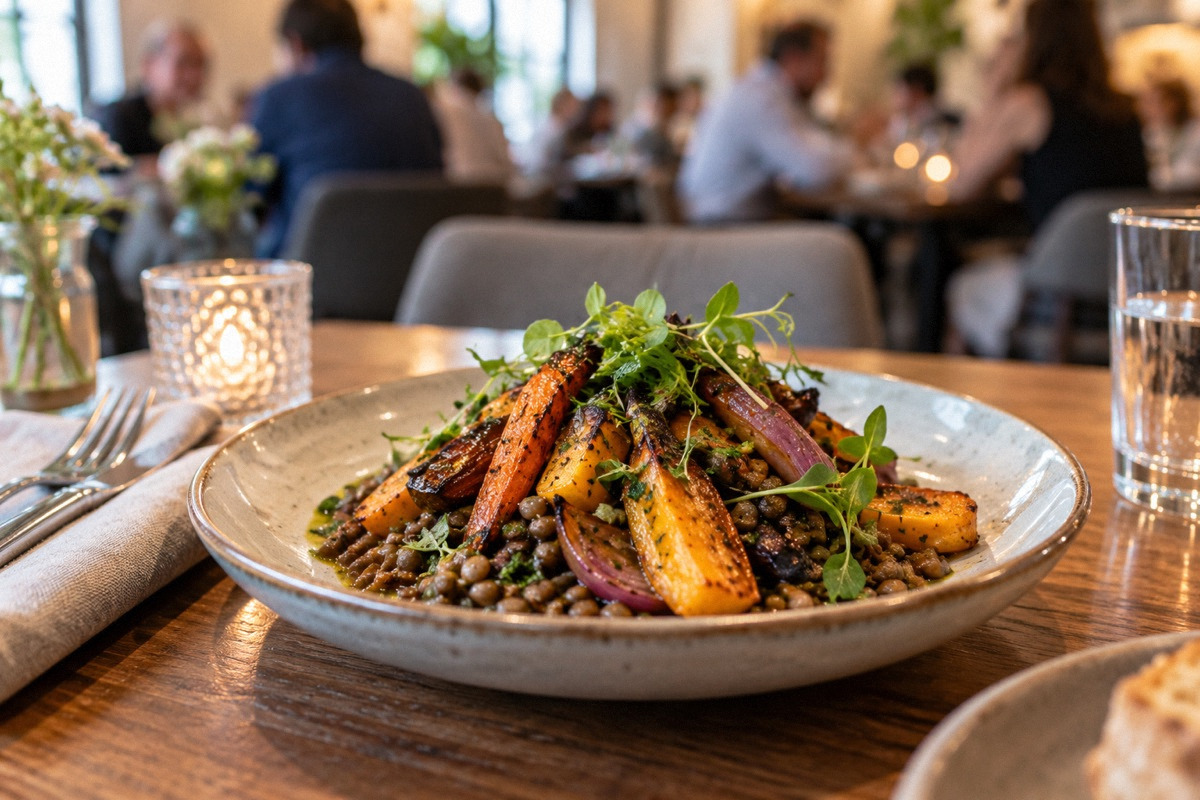
Often yes, if you start small. One or two vegan dishes built mostly from ingredients you already stock carry little inventory risk, and their main value may be keeping mixed groups from choosing somewhere else. Avoid specialty substitutes with short shelf lives until demand is proven. Audit recipes for hidden animal products, give the dish a home station so it does not disrupt service, and measure how often it appears on tickets alongside non-vegan dishes. Promote it modestly through menu marking and directory listings.
The real fear is waste and disruption, not the idea of vegan food
Owners who hesitate over vegan dishes are rarely objecting to plant-based food. They are worried about two practical costs: inventory bought for a handful of orders that spoils before it sells, and special requests that break the rhythm of a busy line. Both concerns are legitimate, and both appear in owner discussions.
In a thread on providing vegan options, one owner says vegan and celiac requests throw a wrench into the flow of service every time, yet keeps a handful of those options anyway. Their reasoning is local: nobody else in their small tourist town tries, which gives them the groups that include someone with a dietary restriction. The same reply warns that many vegan substitutes are expensive, have a short shelf life and are disliked by vegans, noting that one case of vegan pizza cheese lasts a year in the freezer. That record is a search excerpt and reflects one operator's market. The useful lesson is that the decision depends on what you buy for the dish and how the line handles it, not on whether vegan food is good or bad business in general.
Audit what you already stock before buying anything
Start with the inventory list, not with a recipe search. Go through every produce item, grain, legume, dry good, oil, spice and sauce base you already buy and mark which are plant-based. Then look for combinations that make a complete dish, not a side plate. Many kitchens already hold enough: rice or noodles, a legume, several vegetables, a crisp element, and a sauce built from oil, acid and aromatics.
The point of this audit is that the new dish should share ingredients with existing ones. If every component already moves through other dishes, slow sales of the vegan plate do not create waste; the ingredients get used elsewhere. The only new purchases should be small and shelf-stable, such as a particular spice or a dry legume, until the dish has proven itself.
| Stock category | Example check | Use in a vegan build |
|---|---|---|
| Grains and starches | Is the rice cooked with butter or stock? | Base, if cooked in water or vegetable stock |
| Legumes | Are beans cooked with lard or meat? | Protein component |
| Vegetables | Already used across several dishes? | Bulk and texture |
| Sauces | Contain fish sauce, butter, cream, honey or anchovy? | Use or adapt only fully plant-based ones |
| Breads and wraps | Contain milk, butter, egg or an egg wash? | Only if confirmed plant-based by the label |
| Fryer and griddle | Shared with meat or fish? | Disclose shared equipment if guests ask |
Hidden animal ingredients are where good intentions fail
A dish that looks vegan can contain chicken stock in the rice, butter finishing the vegetables, fish sauce or anchovy in a dressing, honey in a glaze, lard in the beans, egg wash on bread, or dairy in a store-bought bun. Guests who choose vegan dishes tend to know these, and a server who says yes without checking can undo the goodwill the dish was meant to earn.
Fix this at the recipe card. For each component, list the ingredients and the label of any purchased product. Mark the dish vegan only if every component is confirmed, and note any shared equipment such as fryers. Be careful not to treat vegan as a synonym for allergen-free. A vegan dish can still contain nuts, soy, sesame or wheat, and a guest with an allergy needs a different and more careful conversation, covered in the related article on handling allergy and celiac requests during service.
The group effect: one guest can decide where five people eat
The strongest argument for a vegan dish on a non-vegan menu is often not the vegan guest's own check. It is the rest of the table. When a group chooses a restaurant, one person who cannot find anything to eat can steer the whole party elsewhere. That is what the tourist-town owner in the thread was describing: their vegan options win groups that would otherwise skip them.
In a separate discussion asking whether a vegan menu benefits the business, a former owner who ran a menu with matching meat and plant-based versions says yes, describing a loyal crowd that shares its experiences on social media. A second commenter agrees on loyalty. Both replies are anecdotes from a search excerpt, not sales data, and neither isolates the group effect. That is why measuring it in your own room matters more than any claim about vegans as a market.
Hypothetical worked example: is one dish worth it?
All numbers here are hypothetical. A casual restaurant adds one vegan grain bowl built from stock it already carries. The only new purchase is a $12 container of a spice blend used over a month. The bowl sells 25 times a week at $15, with a plate cost of $4.20, so the dish itself adds 25 times $10.80, or $270 a week after food cost, minus about $3 a week for the spice.
Now the group effect. Suppose ticket tagging shows the bowl appears on 10 tickets a week that also contain non-vegan dishes, and the owner judges that on roughly 3 of those tables the group would not have come without the option. If those 3 tables average 4 guests at a $28 average check, that is 12 guests and $336 in weekly sales. At a hypothetical 30% food cost, that leaves $235.20 after food cost from the companions, on top of the bowl's own contribution. The judgment of 3 tables is a guess, so treat this as a range. Even at one table a week, the companions add $112 in sales.
Contrast that with a dish built around a specialty substitute, such as a plant-based cheese costing $80 a case. If half the case is discarded before use, $40 of every case is waste, and the dish has to sell far more to justify itself. This is the cost the owner in the first thread was warning about.
Making the dish easy for the line, not a special request
Service disruption comes mostly from dishes that are improvised on the fly. A vegan request handled as a modification of a meat dish forces the cook to remember what to leave off, find a substitute, and avoid a contaminated pan, all during a rush. A dish that exists on the menu with its own build, station and prepped components is just another ticket.
Give the dish a home station, its own prepped sauce in a labeled container, and a point-of-sale button rather than a free-text modifier. Train servers on what is in it and what is not. If the dish shares a fryer or griddle with animal products, decide whether to disclose that on the menu or only when asked, and make the answer consistent.
- Dedicated POS button and ticket name
- Pre-batched sauce or dressing, labeled and dated
- One assigned station and plate build
- Server card listing ingredients and shared equipment
- Clear guidance that vegan is not the same as allergen-safe
Promote lightly and let it prove itself
The former owner in the second thread suggested tapping local vegan social groups lightly and mentioned registering with directories such as HappyCow, adding that places that overdo it seem less welcoming. The other commenter repeated the advice not to overdo it and noted you do not need a large prep commitment. For a non-vegan restaurant, light promotion means marking the dish clearly on the menu with a defined symbol, making sure online menus show it, and listing the restaurant where people search for options.
Avoid building a large campaign around a single dish. If it underdelivers, the attention backfires. Let a few months of sales and ticket data decide whether to add a second option or rotate the first.
Decision checklist and what to track
Make the decision with a 60- to 90-day trial and a short list of measures. Keep the recipe cards, ticket counts and any waste records so the decision to expand or drop the dish rests on evidence.
- Dish built mostly from existing stock
- No specialty substitute purchased until demand is shown
- Every component confirmed free of animal products
- Home station, POS button and server training in place
- Weekly count of the dish sold
- Weekly count of tickets pairing it with non-vegan dishes
- Waste log for any ingredient bought only for the dish
- Review date to expand, adjust or drop
Questions that come up next
Do I need a separate fryer or prep area to call a dish vegan?
Many vegans accept shared equipment if they are told, but expectations differ, so disclose it when asked or on the menu. The bigger requirement is that the ingredients themselves are free of animal products, including stocks, butter and sauces. Allergy safety is a separate issue; a guest with an allergy needs a specific cross-contact conversation, not a vegan label.
How many vegan dishes should a non-vegan restaurant offer?
Start with one or two complete dishes built from stock you already carry. Owner anecdotes stress not overdoing it, and a small number lets you learn without inventory risk. Add more only when the dish sells steadily and ticket data shows it bringing in mixed groups.
Sources & context
Forum accounts are unverified experiences. Read government sources for their stated jurisdiction and check requirements with the responsible authority for your location.
- Providing Vegan Options on Menu (r/restaurantowners)reddit · Search excerpt including one detailed owner reply: build from existing stock, vegan and celiac requests disrupt service, options capture groups in a small tourist town, substitutes are costly and short-lived. One operator's experience.
- Is a vegan menu make any substantial benefit the business (r/restaurantowners)reddit · Search excerpt. A former owner of a mirrored meat and plant-based menu reports a loyal, social crowd and advises light promotion; a second commenter agrees. Anecdotes, not sales data.


