
The practical answer
In a widely upvoted guest complaint, the objection was less to entree prices than to paying them for plates that looked like a side with the meat removed. It is a small sample but a real risk. Set composition standards first: a real protein, proper seasoning, contrasting textures, a sauce and a comparable portion. Then price by contribution per plate after food cost and any extra prep labor, not food cost percentage alone. Make sure anything labeled vegan contains no cheese, butter or other dairy.
What the guest complaint is actually about
A widely upvoted post in r/vegan titled Restaurant vegan options sets out three grievances. Restaurants offer a cauliflower or bean burger as the vegan choice and charge the same as the non-vegan version. The bean burger arrives with cheese despite being presented as the vegan option. And at one restaurant the poster paid $45 for an entree that turned out to be a few small, unseasoned, undercooked tofu triangles next to a large mound of rice. The record is a search excerpt of the post, and it reflects one diner's experiences, but the pattern is specific enough to act on.
Read closely, the complaint is not about price alone. The poster accepts that a bean burger is fine. What feels like a slap in the face is the combination: low effort, wrong ingredients and a full price. That gives operators something concrete to fix. A plant-based entree that is clearly cooked with care, correctly described and sensibly portioned has a better chance of justifying an entree price. One that looks like a garnish promoted to a main course risks the reaction the post describes, and one post cannot tell you how many guests share it.
Composition standards that make a plate feel like a main course
The fastest way to avoid the token problem is to write a standard that any plant-based entree must meet before it goes on the menu, the same way a kitchen would standardize a steak plate. The standard is about what guests can see and taste, not about ingredient cost.
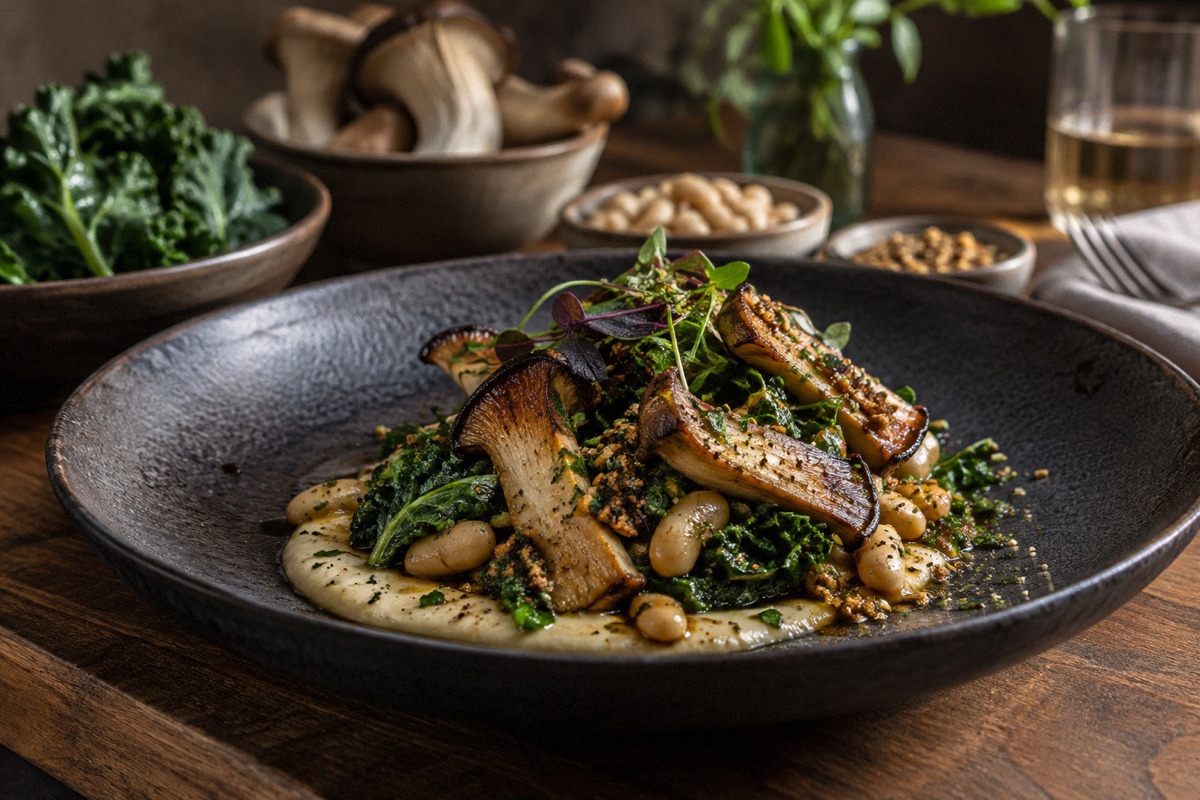
A main-course standard usually includes a substantial protein element, such as legumes, tofu, tempeh or a grain and legume combination, cooked to a deliberate texture rather than left raw or pale. It includes at least two contrasting textures, often something crisp against something soft. It has a sauce or dressing with real seasoning and acidity. The starch should support the plate, not fill it. And the overall portion should leave a guest about as satisfied as the meat entrees beside it. A roasted cauliflower can meet this standard if it is properly roasted, sauced and paired with protein and texture; served alone and plain, it will not.
| Standard | Token version | Main-course version |
|---|---|---|
| Protein | None, or a few pale tofu pieces | Seared tofu, braised legumes, tempeh or grain and legume combination |
| Texture | One soft texture | Crisp element plus a soft or creamy base |
| Sauce and seasoning | None or oil only | Seasoned sauce with acid and aromatics |
| Starch | Large mound of plain rice | Proportioned starch that supports the plate |
| Portion | Smaller than meat entrees | Comparable fullness to other mains |
Why food cost percentage alone gives the wrong price
Many kitchens start from a target food cost percentage, for example dividing plate cost by 0.30 to get a reference price. That reference is a starting point, not a break-even floor, and it behaves most predictably when plate costs are similar across a menu. Plant-based plates often have much lower ingredient costs than meat or fish plates, so the same formula produces a price far below the rest of the menu. The owner then either prices it low and gives up contribution, or ignores the formula and charges the meat-entree price, which is the combination the guest post objects to when the plate is thin.
A better anchor is cash contribution per plate, the money left after food cost. Ask what each entree contributes and price the plant-based dish to contribute a similar amount. Then add any extra prep labor that the plant-based dish requires, because a well-built vegetable plate can take more knife work and more components than a protein that is simply seared. In many cases the result lands between the cost-plus price and the meat-entree price, which is less likely to read as a token charge and still keeps the dish worth selling. Compare dishes on a consistent basis: either include labor for every dish, or treat one dish's labor as the baseline and subtract only the additional labor the other requires.
Hypothetical worked example: short rib versus a cauliflower entree
All numbers are hypothetical. A braised short rib entree sells for $32 with a plate cost of $10.24, a 32% food cost and a contribution of $21.76 after food cost. Its prep labor is treated as the kitchen's baseline for an entree, so the comparison below subtracts only labor beyond that baseline. The kitchen has two versions of a cauliflower entree in mind.
The token version is a roasted cauliflower slab with oil and salt, plate cost about $2.10. Priced at $32 to match the short rib, its food cost is about 6.6%. Its labor relative to the baseline was not estimated. The risk is that guests compare it with the plate next to them and, like the poster in the thread, conclude they overpaid; how often that happens is not something this example can measure.
The developed version adds a white bean purée, crisp roasted chickpeas, an herb salsa and a farro base, raising plate cost to $4.60. It takes about six minutes more prep per portion than the baseline; at a hypothetical $20 an hour loaded labor rate, that is $2.00. Matching only the short rib's contribution after food cost gives $4.60 plus $21.76, or $26.36. Matching it after the extra labor as well gives $4.60 plus $2.00 plus $21.76, or $28.36. The owner chooses $26 to sit clearly below the meat entree. At $26, food cost is about 17.7%, contribution after food cost is $21.40, and after the $2.00 of additional labor it is $19.40, which is $2.36 less than the short rib on the same baseline. A 30% food cost reference price would have been about $15.33, leaving roughly $10.73 after food cost and $8.73 after the additional labor. Whether those six minutes actually add payroll depends on whether the prep fits inside hours already scheduled; if it does, the $2.00 is an allocation rather than a new cash cost, and the owner should judge the dish on total contribution across the menu, not this single figure.
| Dish (hypothetical) | Price | Plate cost | Food cost % | After food cost | After food cost and labor beyond baseline |
|---|---|---|---|---|---|
| Short rib (labor baseline) | $32.00 | $10.24 | 32.0% | $21.76 | $21.76 |
| Token cauliflower at meat price | $32.00 | $2.10 | 6.6% | $29.90 | Not estimated |
| Developed cauliflower at $26 | $26.00 | $4.60 | 17.7% | $21.40 | $19.40 |
| Developed cauliflower at 30% reference price | $15.33 | $4.60 | 30.0% | $10.73 | $8.73 |
The token plate's high margin is borrowed against the next visit
On paper the token plate contributes the most per sale after food cost, $29.90 in the example. That figure says nothing about what happens next. The poster in the thread was explicit that menus like this drive them away from a restaurant, and a guest who leaves may take a group with them. Whether that risk outweighs the extra margin cannot be read from a costing sheet; it has to be watched in guest comments, reviews that mention the dish, and whether guests who order it come back.
The owner-side view in the Providing Vegan Options on Menu thread is a useful counterweight: one operator found that specialty vegan substitutes were expensive, short-lived and disliked, and that dietary requests disrupt service. That supports building the developed plate from whole ingredients you already stock rather than from costly substitutes, which keeps plate cost moderate while improving the result. Both sources are search excerpts reflecting individual experience.
Labeling accuracy: the cheese on the vegan burger problem
A dish described as vegan should contain no animal products, and the guest in the thread specifically complains of cheese arriving on a vegan burger. Separate the words carefully on the menu. A bean burger with cheese and a dairy bun is vegetarian, not vegan. If the default build includes cheese, say so and offer the vegan build as its own named item or a clearly listed option.
Hidden dairy is the usual failure point: butter on the griddle or in the bun, cream in a sauce, cheese in a pesto, milk in a bread dough. Check the purchased product labels for every component, write the result on the recipe card, and train servers to answer from the card. Hidden dairy is also a milk allergen issue, so an inaccurate vegan label can mislead a guest with a milk allergy who relies on it. Treat allergy requests through your allergy procedure, not by pointing to the vegan symbol.
- Separate vegetarian and vegan labels on the menu
- Confirm buns, breads and wraps by product label
- Check griddle fat and finishing butter
- Check pestos, sauces and dressings for dairy, egg, honey or fish
- Put the confirmed build on the recipe card and server notes
Pricing the dish relative to the menu around it
Once the plate meets the standard and its contribution is calculated, look at how its price sits on the menu. A developed plant-based entree priced a few dollars below the meat mains reads as fair. Priced above the cheapest meat entree, it needs visible reasons in the description, such as named components and techniques. Priced identically to a meat dish, it must be equally substantial.
Consider an optional protein add-on, such as extra tofu or a second legume, priced separately. Guests who want a heavier plate can choose it, and the base price can stay moderate. Write the description with the components guests will actually see, which signals effort and sets accurate expectations.
Review checklist before the dish goes on the menu
Run every plant-based entree through this list before printing the menu, and repeat it when recipes change. Keep the recipe card, label checks and costing worksheet together.
- Meets the written composition standard
- Plate cost calculated from current invoices
- Extra prep labor estimated
- Price set by contribution, then checked against neighboring entrees
- Every component confirmed free of animal products if labeled vegan
- Description lists visible components
- Staff tasted it and can describe it
- Guest comments reviewed after the first month
Questions that come up next
Should a vegan entree cost the same as a meat entree?
Only if it is equally substantial and developed. The guest complaint cited here focuses on paying the same for a thinner plate. A practical method is to price the plant-based dish so it contributes a similar dollar amount after food cost, then account for any added prep labor. That often puts it somewhat below the meat entrees while keeping it worth selling.
Is a cauliflower steak a bad vegan option?
Not inherently. It becomes a token option when it is served plain, with no protein, sauce or texture, at a meat-entree price. Roasted well and built with legumes, a crisp element and a seasoned sauce, it can be a real main course. The problem guests describe is the low-effort version, not the vegetable.
Sources & context
Forum accounts are unverified experiences. Read government sources for their stated jurisdiction and check requirements with the responsible authority for your location.
- Restaurant vegan options (r/vegan)reddit · Search excerpt of the original post. One diner's complaints: same price for cauliflower or bean burger options, cheese on a vegan burger, a $45 entree with small undercooked tofu. Guest perspective only; the named restaurant is not identified here.
- Providing Vegan Options on Menu (r/restaurantowners)reddit · Search excerpt with one owner reply on the cost and shelf life of vegan substitutes and service disruption. One operator's experience, used for owner-side cost context.


