
The practical answer
When a guest says an item was missing from a takeout order, you usually cannot prove what was in the bag, so the policy has to work without proof. Measure your own packing error rate first, then photograph each sealed bag with its order number. Make the default remedy item-level, not whole-order: replace or refund the missing item to the original payment method. Escalate only on a documented pattern of repeat claims, handled by a manager, never by accusing a guest at the counter.
What a missing-item call actually tells you, and what it doesn't
A phone call saying the fries were not in the bag contains exactly one fact: the guest is telling you something went wrong. It does not tell you whether the cook forgot the fries, the packer put them in the wrong bag, a family member ate them in the car, or the caller is testing whether you refund on request. Most owners know all four happen. The trouble is that a policy built around the last possibility treats the first three as fraud, and a policy built around the first three leaves no way to respond to the last.
An owner on r/restaurantowners described this tension directly: more guests were demanding full refunds for items they said were missing, and the owner was considering switching to store credit, but the few guests offered credit reacted badly (Reddit discussion). The owner read that reaction as a sign those guests had received the item. That is an inference, not evidence; an honest guest who just paid for food they did not get may also be angry at being offered a coupon instead of their money. Only an excerpt of that thread was recorded, but the replies it contains point to the two practical tools this article develops: photograph each order, and replace or refund the specific item rather than arguing about the whole order.
The goal, then, is not to detect liars on the phone. It is to reduce genuine errors, create a record that lets you see patterns, and choose remedies that cost little when the guest is honest and gain little for someone who is not.
Count your own errors before suspecting your guests
Before tightening anything on the guest side, find out how often your kitchen actually ships an incomplete bag. Many owners skip this step because claims feel suspicious, yet a missing side or sauce is one of the easiest packing mistakes to make during a rush. If your true error rate is meaningful, a stricter refund policy mostly punishes honest guests while the real cause continues.
A simple two-week check works without new software. At the handoff, have a second person, not the packer, reread a sample of tickets against sealed bags before they go on the shelf, and log every miss they catch: what was missing, which station, what time. That gives you a rough internal miss rate for orders that would otherwise have left the building incomplete. Compare that with the claims you receive over the same period. If the catches cluster around one item, such as a sauce cup or a side that lives on a different station, you have found a process fault rather than a guest problem. Ordering your own takeout as a scheduled audit adds an outside view of the same question; see the related article on auditing takeout orders.
A packing-and-photo routine that creates a usable record
The photo suggestion from the thread is useful only if it is consistent. A photo taken when someone remembers is a record of the orders you were already careful with. Build it into the last step of packing so it happens on every order, including busy ones.
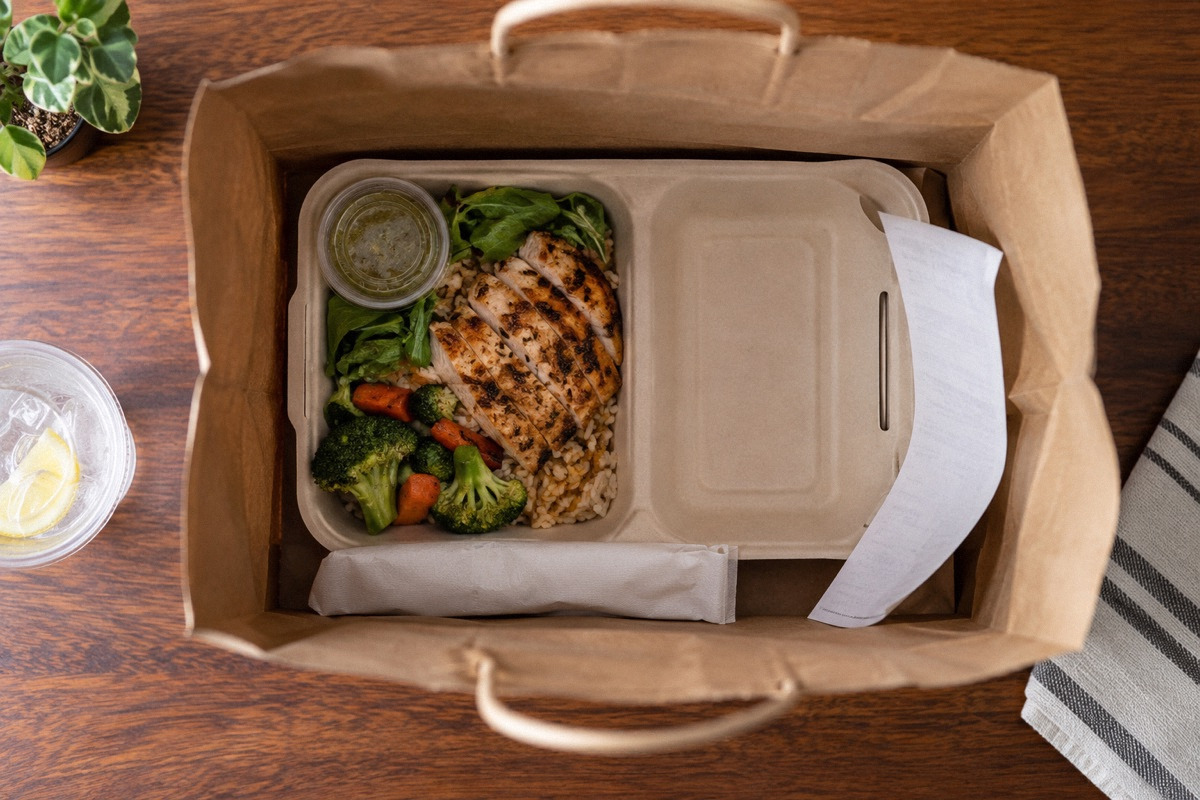
Be realistic about what the photo proves. A picture of a sealed bag with the ticket stapled to it shows that a bag existed, was labeled for that order and was closed at a given time. It does not show what is inside. A photo of the open bag with containers visible, taken just before sealing, is stronger, but it takes a few seconds longer and may not be practical at peak. Many operations photograph the open bag for larger orders and the sealed bag for small ones. Either way, pair the photo with the checker's initials on the ticket, because the claim you are most often answering is whether anyone checked.
- Reread every ticket line and modifier against the containers before closing the bag.
- Photograph the open bag with containers visible, or the sealed bag with the ticket attached, showing the order number.
- Initial the ticket at the check station; the checker should not be the person who packed it.
- Seal the bag with a sticker or tape so a guest can see it has not been opened since packing.
- Store photos by date and order number for a set period, long enough to cover your typical claim window and card dispute timelines.
Tiered remedies: matching the response to the history
A tiered policy keeps the front line simple. Staff do not judge credibility; they look up the guest's claim history and apply the tier. Managers handle anything beyond the first tier, so the person on the phone is never the one deciding whether a guest is honest.
The thresholds below are an operational example, not a legal or industry standard. Choose your own windows based on how often your regulars order. A guest who orders four times a week will legitimately hit two errors in a quarter far more often than someone who orders twice a year, so a raw count without order frequency can mislead. If your system allows it, track claims as a share of each account's orders rather than as a bare number.
| Situation | Default remedy | Who handles it | Record kept |
|---|---|---|---|
| First claim, or none in the last 90 days | Refund the missing item to the original payment, or remake it for pickup now; guest chooses | Any trained staff member | Order number, item, remedy, date |
| Second claim within 90 days | Same item-level remedy; manager checks photo and ticket initials before calling back | Manager | Plus photo result and any packing fault found |
| Third claim within 90 days, or photo clearly shows the item | Manager calls, explains what the record shows, offers to check the bag together at pickup on future orders | Owner or general manager | Plus summary of the call |
| Claim for the whole order with no specific item named | Ask which items were missing; refund only those | Manager | Items named and refunded |
Refund, replacement or store credit: choosing the default
Store credit feels safer because the money stays in the business. The thread excerpt shows why it often backfires: a guest who believes they paid for something they did not receive hears store credit as being told to spend more money with you to get what they already bought. For a first claim, an item-level refund to the original payment method usually costs about the same as a credit and avoids that reaction. Credit works better as an option the guest can choose, sometimes with a small bonus, than as the only answer.
Two outside constraints limit how hard a line you can take. First, a guest who paid by card can dispute the charge with their card issuer whatever your counter policy says, and a dispute over a whole order usually costs you more in time and fees than refunding one side; the related article on chargebacks covers that process. Second, whether a no-refund or credit-only policy is enforceable, and how it must be disclosed before purchase, depends on your state's consumer protection law. If you plan to restrict refunds, check with your state attorney general's consumer guidance or a local attorney and post the policy where guests see it before they order, not only after a problem.
One owner reply in the thread said they replace the item or refund it but do not take food back. That is a sensible rule for a different reason: food that has left your control cannot be resold, and asking for it back mainly signals distrust.
Tracking repeat claims without treating guests as suspects
A separate thread titled Scammers shows owners disagreeing about whether to refund complaints they suspect are not genuine (Reddit discussion). In the recorded excerpt, one owner considered a partial refund while asking the guest not to return, and one commenter said that if refused, they would simply throw the food away and never come back. Both reactions are real costs. The way to avoid choosing on instinct is a log that shows whether a pattern exists before anyone acts on it.
Keep the log minimal: date, order number, account identifier such as phone or email, item claimed, remedy given, whether the photo was checked and what it showed. Do not record guesses about honesty, and restrict access to managers. Review it weekly. Look for three distinct patterns: one item that keeps going missing across many guests, which is a station problem; one shift or packer associated with most claims, which is a training problem; and a small number of accounts with a high claim share, which is the only pattern that justifies a guest-side response.
For the third pattern, the response is a conversation and a process change, not an accusation. Offer to open and check the bag together at pickup, or ask that the guest call while still at the counter if anything is missing. A guest who has genuinely had bad luck usually welcomes that. Someone who was taking advantage tends to stop.
Staff scripts for the phone and the counter
Scripts remove the temptation to argue. The person answering the phone should apologize, confirm the specific item, offer the tier's remedy and log it, in that order. They should never say they photographed the bag as a way of contradicting the guest; mentioning the photo is the manager's job, and only when the history warrants it.
First-tier phone script: Thank you for letting us know, and I'm sorry. Can you tell me which item was missing? I can refund that item to your card now, or have it remade and ready for pickup in about ten minutes. Which would you prefer? Manager callback for a repeat claim: I've looked at your order. Our packing check shows the side was marked as included and the bag was sealed at 6:42. I've refunded it again this time. To make sure this doesn't keep happening, would you be willing to check the bag with us at pickup next time? That wording states what the record shows without calling anyone a liar, and it ends with a fix rather than a warning.
Worked example: one month of claims at a counter-service shop
Hypothetical example, for illustration only. A counter-service shop handles 1,200 direct takeout orders in a month and receives 30 missing-item claims, a claim rate of 2.5 percent (30 divided by 1,200). Under its old policy it refunded the full order on every claim. At an average order of $32, that cost 30 times $32, or $960.
The owner adds a check station and starts logging. The log shows 13 of the 30 claims involved one dipping sauce kept at a separate station, which points to a packing fault rather than guests. It also shows 4 accounts responsible for 11 claims; the other 19 claims came from 19 different accounts, one each. Moving the sauce into the packing station and adding it to the checklist addresses the largest cluster.
Switching to item-level refunds changes the cost of the same 30 claims. If the average missing item is $6, the refunds total 30 times $6, or $180, which is $780 less than the full-order approach. For the 4 repeat accounts, a manager calls each one and offers the at-pickup bag check. The next month the shop records 14 claims. That drop may reflect fewer packing errors, fewer opportunistic claims, or ordinary month-to-month variation; one month of data cannot separate those causes, so the owner keeps logging before drawing conclusions.
Failure modes and what to keep on file
The common failures are predictable. A credit-only policy that guests discover only after a problem invites disputes and bad reviews. Photographing some bags but not others makes the record useless. Letting front-line staff decide who is honest produces inconsistent treatment that guests notice and compare. Treating every claim as suspicious hides the packing faults that cause many of them. And refusing remedies outright may simply move the dispute to the guest's card issuer.
Retain the claim log, the bag photos for your chosen retention period, initialed tickets, the written policy as posted and the date it took effect, and any notes from manager callbacks. Those records let you show a card issuer or a guest that you have a consistent process, let you find your own errors, and let you decide, with evidence rather than instinct, when a guest-side conversation is justified.
Questions that come up next
Should a restaurant give a refund or store credit when a takeout item is missing?
For a first claim, refunding the specific missing item to the original payment method, or remaking it for pickup, usually costs about the same as credit and avoids angering an honest guest. Offer credit as an option, not the only answer. Whether a credit-only policy is allowed, and how it must be disclosed, depends on your state's consumer protection law.
Does a photo of the takeout bag prove the item was included?
Not completely. A photo of a sealed, labeled bag shows it was packed and closed at a certain time, not what was inside. A photo of the open bag before sealing is stronger. Combined with initials from a second checker and a claim log, photos show a consistent process and help you spot patterns rather than settle a single argument.
Sources & context
Forum accounts are unverified experiences. Read government sources for their stated jurisdiction and check requirements with the responsible authority for your location.
- How do you handle 'I didn't receive' or 'missing' item claims from take out? (r/restaurantowners)reddit · Search excerpt only, not a full thread review. The original poster reports rising full-refund demands and negative reactions to store credit; replies suggest a labeled photo of each order and replacing or refunding the item without taking food back. The poster's view that angry reactions indicate dishonesty is their inference, not evidence.
- Scammers (r/restaurantowners)reddit · Search excerpt only. Shows owners debating whether to refund suspected scam complaints, including a partial-refund idea and a commenter who says a refused refund would end their patronage. Illustrates the trade-off; it does not measure how common false claims are.


