The practical answer
Food fraud, which FDA calls economically motivated adulteration, is when a valuable ingredient is left out, removed or replaced, or something is added to make a food look better or worth more. Seafood, olive oil, honey and spices are FDA's own examples. A restaurant can't lab-test every case, but it can buy against written specs, ask for documentation, weigh frozen seafood after thawing, flag prices that look too good, and stop making a menu claim it can't support. If you suspect substitution, document it and quarantine the product before you raise it with the supplier.
What FDA means by food fraud, and why it matters to you as the buyer
The U.S. Food and Drug Administration's page on economically motivated adulteration (food fraud) defines it as someone intentionally leaving out, taking out, or substituting a valuable ingredient or part of a food, or adding a substance to make a food appear better or of greater value. FDA's examples include honey or maple syrup mixed with cheaper sweeteners, extra-virgin olive oil diluted with cheaper vegetable oil and sold as pure olive oil, a cheaper fish species sold as a more expensive one, ice added to frozen seafood to make it heavier, and costly spices such as saffron bulked up with other plant material or colored with dyes.
For a restaurant, the risk runs in two directions. You pay for something you didn't get. Then you may repeat the supplier's claim to your guests. If your menu says "wild Gulf snapper" and the fillet is something else, the false statement on your menu is yours, even if you were fooled. The Federal Trade Commission, the federal agency that enforces truth in advertising nationwide, published a 2024 business blog post, "Mind your net impression: when seafood is not wild, fresh-caught, or local". It describes a hypothetical restaurant whose décor, menus and social media imply fresh, local seafood when it serves farmed, frozen, imported product. The post says false implied claims are illegal, and it counts menus, décor and staff apparel as advertising. It is federal agency guidance written about a hypothetical, not a rule specific to any city. State and local consumer protection laws may also apply where you operate.
Where guests and staff notice a substitution first
Guests often notice a downgrade before the buyer does. In a since-removed r/restaurant post about a broadline distributor, whose recorded comments survive in a search excerpt, members of the public described a once-favorite restaurant whose burger and pizza cheese seemed worse after a change of ownership and supplier. Others complained about imported shrimp in a coastal area once served by local boats. Those are opinions about quality and sourcing, not proof of fraud. Choosing imported shrimp, for example, is lawful. They do show that guests compare what you serve with what they believe you promised.
Staff see it from the other side. In a r/restaurantowners thread about invoice pricing, one owner said their rep substituted items without telling them. Another described discovering that a case of portion cups held fewer units than a competitor's case of the same product. An unannounced substitution is not fraud. Usually it's a stock-out workaround. But it lands at the back door looking exactly like a quiet downgrade, and the receiving process should treat both the same way: compare the delivery to the spec.
High-risk categories and the specific signal for each
Concentrate on the products where the price gap between the real item and a substitute is large and the difference is hard to see. FDA's examples are a good starting list. Add any product that carries a menu claim about species, origin, grade or method.
| Category | Common substitution type | What you can check without a lab | Document to request |
|---|---|---|---|
| Finfish fillets | Cheaper species sold as a premium species | Skinless fillets are hardest; buy skin-on or whole where practical; compare texture and flake with known product | Species name (common and, if available, scientific), origin, wild or farmed on the invoice |
| Frozen shrimp and seafood | Excess ice glaze inflating billed weight | Thaw and drain a sample; compare net product weight with billed weight | Spec sheet stating net weight or glaze percentage |
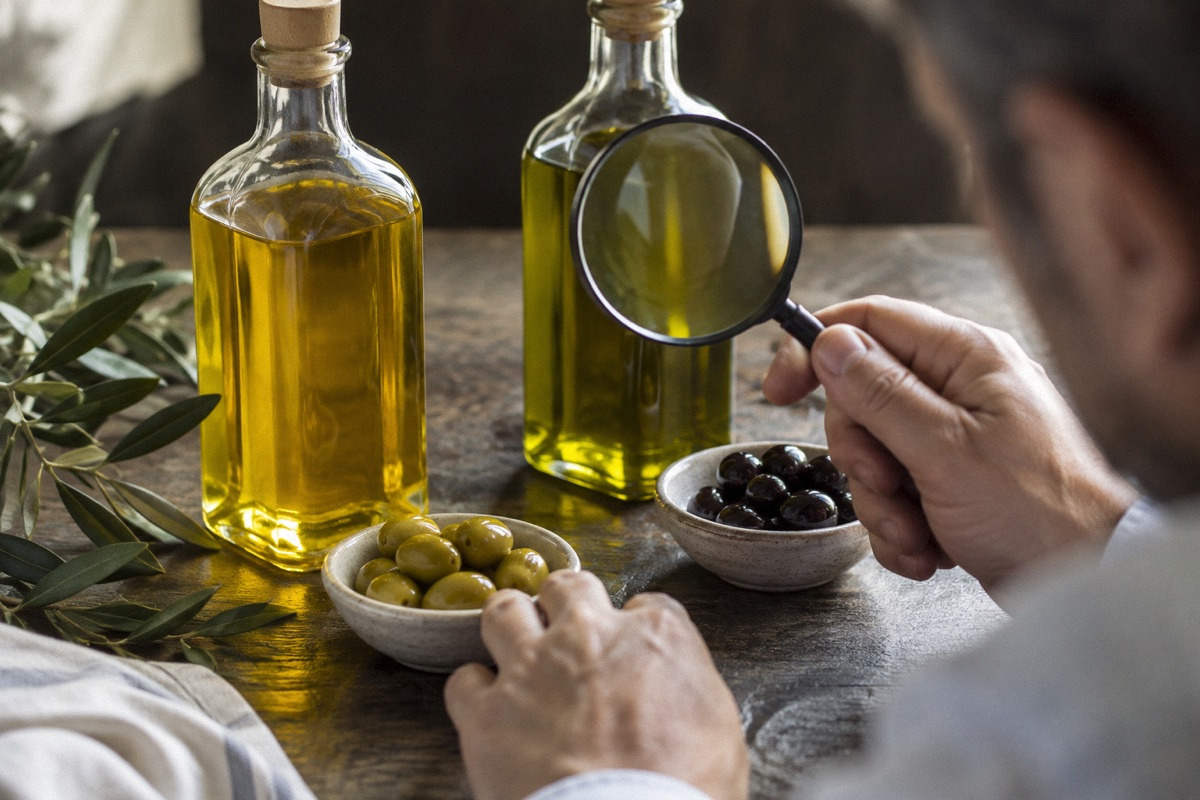
| Extra-virgin olive oil | Dilution with cheaper oils | Sensory check against a reference bottle you trust; watch for a price far below comparable products | Product spec, harvest or best-by date, producer contact |
| Honey and maple syrup | Blending with cheaper sweeteners | Compare with a reference product; ask how the source is verified | Supplier's origin and testing statement, if any |
| Saffron and ground spices | Bulking with other plant material or dyes | Inspect threads and color; be wary of a deep discount on expensive spices | Supplier spec and lot information |
Write specs that make a substitution visible
A vague order such as "snapper fillet 6 to 8 oz" can't be checked. A spec can. For each high-risk item, write down the common name and, where the supplier provides it, the scientific name, along with origin, wild or farmed, fresh or previously frozen, pack size, net weight, and any grade. Ask the supplier to put the same terms on the invoice. When the invoice wording changes, for example "snapper" becoming "white fish fillet," your receiver has something concrete to flag.
Specs also protect your menu. Write menu claims only from the spec and the invoice, never from memory or a rep's verbal description. If a supplier won't put a claim in writing, don't print it on the menu.
Worked example: an ice-glaze check on frozen shrimp (hypothetical)
These numbers are invented to show the method. They aren't measurements of any real product. A restaurant buys a case of frozen shrimp billed as 10 lb at a hypothetical $9.00 per pound, so $90.00 for the case. Some protective ice glaze on frozen seafood is normal, and the label should state net weight. The receiver thaws one sealed bag under refrigeration, drains it, and weighs the product. Scaled to the case, the shrimp alone weighs 8.2 lb.
The case therefore held 1.8 lb that wasn't shrimp. That's 1.8 ÷ 10 = 18 percent of the billed weight. The real cost per pound of shrimp is $90.00 ÷ 8.2 lb, about $10.98, not $9.00. Whether that's acceptable depends on what was promised. If the spec and label said net weight 10 lb, the restaurant has a documented shortfall to raise. If the label stated glazed weight and the supplier's spec disclosed a glaze percentage, the restaurant simply needs to cost its recipes on $10.98 and compare suppliers on drained weight. Either way, the plate cost was wrong until someone weighed it.
Run the same check whenever you change suppliers or brands, and occasionally afterward. Keep the bag, the label and the weights together as one record.
Receiving and sensory checks that fit a real kitchen
You don't need a laboratory for most of this. Train one person to compare deliveries with a reference: a photo of the correct product, a retained sample of a trusted oil, or a known-good fillet. Have the receiver open one case of each high-risk item per delivery and compare the label, the pack, and the appearance with the spec. Make price part of the check too. A sudden drop well below what other suppliers quote for a premium product is worth a question, because the gap has to come from somewhere.
Commercial laboratories offer species identification and authenticity testing. It costs money, so save it for high-value items where a menu claim depends on the answer, or for situations where the supplier's documents and your sensory checks disagree.
- Compare the invoice description with the spec on every high-risk line.
- Open a sample case and check the label, pack size, and appearance against a reference photo.
- Thaw and weigh frozen seafood samples whenever you change supplier or brand.
- Flag a premium product priced far below comparable quotes for a documentation request.
- Keep labels and lot numbers from high-risk products for as long as your records policy requires.
What to do if you suspect substitution
Start with documentation, not accusation. Set the product aside and label it so it isn't used. Photograph the label, lot number and invoice. Write down what you observed and who observed it. Then ask the supplier in writing for the spec, origin documentation, and an explanation. Many problems turn out to be a picking error or an unapproved substitute, and both are fixed with a credit and a corrected order.
If the explanation doesn't hold up, you have options. You can commission a test, stop buying the item from that source, and, for FDA-regulated foods, report a suspected problem to FDA. FDA's food fraud page says the agency addresses fraud through inspections, testing, coordination with other agencies, and tools such as recalls and import alerts. Your state or local food safety agency may also want to know, especially if safety could be involved. Meanwhile, correct your own menu. Remove any species, origin or grade claim you can no longer support until you can verify the product again.
Avoid public accusations against a supplier based on suspicion alone. Your records, the supplier's response and any test result are what matter. How you handle any money in dispute depends on your account terms and the law where you operate.
Failure modes
The most common failure is a claim nobody is maintaining. A menu says "wild" because it did two suppliers ago. Second is a spec that exists only in the chef's head, so nobody else can spot a change. Third is a receiving check that looks at the box and never inside it. The last is overcorrection: treating every substitution as fraud, which damages supplier relationships and buries the real problems. Keep a short list of high-risk items, a written spec for each, a sample check per delivery, and a rule that menu wording follows the invoice.
Questions that come up next
Is it food fraud if my distributor substitutes a different brand without telling me?
Not necessarily. FDA describes economically motivated adulteration as intentionally removing, substituting or adding something to make a food appear more valuable. A brand swap during a stock-out is a service problem, not automatically fraud. Treat it as a receiving discrepancy: compare it with your spec, accept or refuse it, and make sure any menu claim still matches what you received.
Am I responsible for a false seafood claim on my menu if my supplier mislabeled the fish?
The claim on your menu is your statement to guests. The FTC's 2024 business guidance says menus, décor and staff apparel count as advertising and that false implied claims are illegal under federal law. State consumer protection laws may also apply. Base menu claims on written specs and invoices, and remove any claim you can't currently verify.
Sources & context
Forum accounts are unverified experiences. Read government sources for their stated jurisdiction and check requirements with the responsible authority for your location.
- FDA: Economically Motivated Adulteration (Food Fraud)government · Federal (U.S. FDA) page fetched directly. Supplies the definition and the examples used here: sweetener blending in honey and maple syrup, olive oil dilution, seafood species substitution, ice added to frozen seafood, and spice bulking or dyes. It gives no specific purchasing procedure; the buyer checks in this article are editorial practice, not FDA requirements.
- FTC Business Blog: Mind your net impression: when seafood is not wild, fresh-caught, or local (Sept 18, 2024)government · Federal Trade Commission business guidance fetched directly. Uses a hypothetical restaurant to explain that implied claims through décor, menus and social media can be deceptive, and that false implied claims are illegal. It is guidance about advertising, not a seafood labeling regulation, and does not address local law.
- r/restaurant: removed post about a broadline distributor (comments preserved in search excerpt)reddit · INDIRECT and search-excerpt only; the original post is removed. Members of the public describe perceived ingredient downgrades after an ownership and supplier change and complain about imported shrimp. Opinions, not evidence of fraud. The planner packet attributed this shrimp discussion to the 1tuovod thread, but the recorded text places it here.
- r/restaurantowners: How do you guys manage random pricing at Sysco?reddit · Directly inspected thread capture. Commenters describe unannounced substitutions and a case containing fewer units than expected. Anecdotal and unverified; used to show how substitutions reach the back door, not to allege fraud.


